Just came across DC Greens. How to get vegetables to an urban population- compliments of Lauren Shweder Biel.
Produce Plus
Over the summer months, DC Greens worked with the Department of Health to implement their Produce Plus program. Operating with municipal funding, Produce Plus allows any DC resident on Medicaid, SNAP, WIC, and other federal benefit programs to get $10 in market dollars per week to purchase produce at the city’s farmers markets. The demand for this program was astonishing. Markets across the city saw lines around the block on a weekly basis!
DC Greens spent the fall analyzing the data for the program, and we are thrilled to report that $167,000 went out to help low-income customers buy local produce. In addition, the program brought new customers to markets, resulting in a city-wide increase in SNAP (food stamp) purchases at farmers’ markets. We are so proud of the city for investing in nutrition incentives at farmers' markets, and thrilled that the program was met with unequivocal demand from the customers who need it the most.
Fruit and Vegetable Prescription Program
This week marks the end of our 2014 Fruit and Vegetable Prescription Program season. For the past six months, patients at four Unity Clinics across the city have received prescriptions from their doctors to redeem for free produce at any of 40 farmers markets across the city. This season, 78 patients and their 173 family members benefited from the program, which DC Greens runs in partnership with the Department of Health and Wholesome Wave. We’ll be analyzing the health data in the coming months, but from our initial review we expect the same strong results that we’ve seen in past years, with drops in Body Mass Index (BMI) and increases in well-patient visits among patients at high-risk for obesity related chronic illnesses.
Saturday, November 29, 2014
Wednesday, August 13, 2014
Planting Now for a Fall Harvest
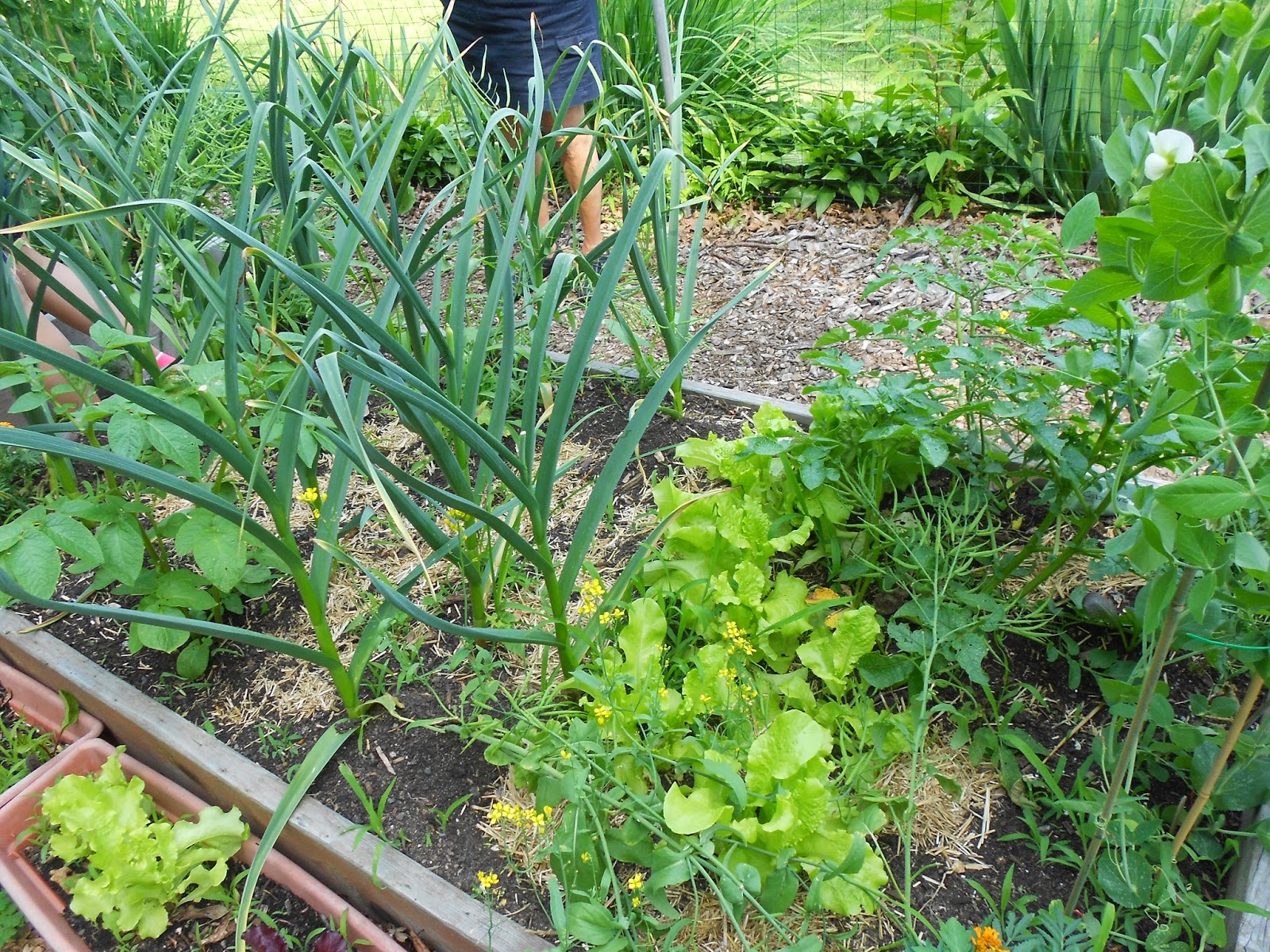
An article perfectly timed to get us thinking about succession planting. Try it, you'll love it. In fact, if you never got around to planting a summer garden, now's your chance. It's always time to garden. Picture lettuces, beets, broccoli, kale, chards, cabbage, beans, peas, parsley...to be harvested into early November. Imagine! Plant what you and your students love to eat. http://www.kidsgardening.org/article/plan-ahead-fall-garden
Harvested potatoes leave room in the beds
for lettuces, kale, etc.
|
Out with the cucumber plants, cherry tomatoes,
peppers, etc., to make room for cool weather crops.
And remember to leave space for garlic in October.
|
Wednesday, June 18, 2014
Dig, Plant, Grow
Dig, Plant, Grow- a guide to planning your own garden curriculum written by teachers Meredith Hill and Sarah Ohana. Here's a link to their perfect little booklet that addresses many ways to bring the garden into the curriculum and the curriculum into the garden. It is scientific, doesn't "talk down' to anyone, and will enrich your understanding of the processes needed to make your gardens grow and flourish.
Download free, enjoy, share. Perfect timing for summer reading and inspiration.
http://www.organicgardening.com/sites/default/files/pdf/digplantgrow.pdf
Download free, enjoy, share. Perfect timing for summer reading and inspiration.
http://www.organicgardening.com/sites/default/files/pdf/digplantgrow.pdf
Thursday, May 29, 2014
How to Build a Potato Tower
What fun! Here's a look at the potato towers at the Stamford Museum and Nature Center.
Constructed by Will Kies, Director of Education and Heckscher Farm, they are already leafing out. Will did 4 nests per tower.
See link below for specific directions:
http://www.onehundreddollarsamonth.com/how-to-build-a-potato-tower/
And the most fun part - harvesting! Kick the tower and out roll lots of potatoes. No blemishes from digging tools. Just beautiful, perfect potatoes.
Constructed by Will Kies, Director of Education and Heckscher Farm, they are already leafing out. Will did 4 nests per tower.
See link below for specific directions:
http://www.onehundreddollarsamonth.com/how-to-build-a-potato-tower/
And the most fun part - harvesting! Kick the tower and out roll lots of potatoes. No blemishes from digging tools. Just beautiful, perfect potatoes.
Saturday, May 17, 2014
4th Annual Lettuce Challenge
The Stamford Garden Club sponsored the 4th Annual lettuce Challenge for the GIVE schools in Stamford. Tiny buttercrunch lettuce plugs were distributed to 16 schools and over 700 students on April 1st. Six weeks later, on May 12th, the 3 best entries from each class or club (over 100) were picked up by the Stamford Garden Club, delivered to the Government Center, and were judged. The best plants in each group were awarded a blue ribbon. The Best in Show went to an entry from Dolan Middle School: perfectly formed, rosette shape, dense center, and dark green in color. It had been grown "au naturel". The student planted the tiny plug in the designated pot with the potting soil provided. He placed the pot into his garden bed, surrounded by soil to keep it warm, watered occasionally, and, as he said, "I just let it grow."
Some entries were grown under gro-lights, some in windowsills, some in mini-greenhouses made from milk jugs. But, "best in show" was done in the most natural and simple way.
Next step: back into the garden beds to be allowed to grow full size. Soon to be a salad!
Enjoy the link to a video from the recognition day, May 14th.
https://www.youtube.com/watch?v=Ldc4clm7Zqo&feature=player_embedded
Some entries were grown under gro-lights, some in windowsills, some in mini-greenhouses made from milk jugs. But, "best in show" was done in the most natural and simple way.
| tiny lettuce plugs being planted on April 1st |
| growing in the pot in the garden bed |
| growing in the milk-jug green house |
| Best in Show |
| overview of one of the tables |
Enjoy the link to a video from the recognition day, May 14th.
https://www.youtube.com/watch?v=Ldc4clm7Zqo&feature=player_embedded
Tuesday, December 10, 2013
We Can All Be Eating Well
I'm off on a tangent. Having seen the documentary, A Place at the Table, I'm having lots of troubled thoughts about the state of nutrition in the USA, especially the terrible eating habits of so many children.
Many of our people live in rural or suburban areas.
Many enjoy the presence of pets.
The pets get fed.
Many have some space that could be dedicated to a small or even a large vegetable garden. This is even possible in urban areas.
I believe we need to reintroduce the concept of home gardening, of raising pets for food (chickens for eggs and eventually for meat, rabbits for meat... )
This has become "trendy" for wealthy suburban families. This used to be normal for almost everyone when we were an agricultural society.
Is it not time to help us become a bit more self-sufficient by learning how to plant some vegetables, some fruit trees or bushes, to raise small livestock, to harvest what we have sown and what we raise?
I think about the small "vegetable garden in every school" project we started in Stamford,CT in 2010. This is a small step toward educating our children about the methods of raising vegetables, how food is grown, what it takes from seed to harvest, and how to cook with the vegetables we grow. These baby steps lead to awareness, self-sufficiency, and a great deal of pride in the accomplishment of producing a tangible food with one's own hands and work.
I think about organizations like Heifer,Int'l which provide a goat or a cow or a dozen chickens, etc to a family in a Third World country in order to improve their lives. This is what we need in the USA. We need to grab the older folks who had Victory gardens during WWII and have them teach their grandchildren before they pass on. We need to resurrect our attachment to the earth, to the microbes, the insects, the birds and bees that make our growth cycles possible. We need to protect these same species from the pesticides and herbicides that are killing them and destroying our soil and invading our food and bodies. We need to touch the earth and let it feed us again in small spaces. The mega-agricultural factories have divorced us from our food source and impoverished our health and our land.
How uplifting to produce some home-grown vegetables, how satisfying to eat what we produce without harmful chemicals, how healthy a lifestyle we could be promoting.
How do we get this message out? Let's get growing!
Saturday, December 7, 2013
Winter is for the birds...
I love the gentle quiet that winter provides. It's time to take a look back at what worked well, what needs tweaking, what we can hope to do next spring. And a time to be grateful for the space winter opens up in our minds and hearts.
So, the birds....
Our school garden club made some simple pine-cone feeders with peanut butter and bird seed.
Materials:
pine cones, string or yarn, peanut butter, tongue depressors, bird seed, newspaper, patience
Process:
Spread newspaper on table (We forgot this.).
Watch the birds discover the feast.
So, the birds....
Our school garden club made some simple pine-cone feeders with peanut butter and bird seed.
Materials:
pine cones, string or yarn, peanut butter, tongue depressors, bird seed, newspaper, patience
Process:
Spread newspaper on table (We forgot this.).
| Tie string to pinecones. |
| |
| Smear peanut-butter on cones. |
| Dredge cones in bird seed. |
| Hang cones from tree. |
Subscribe to:
Posts (Atom)